 中文
中文
 News
NewsSpontaneous glass shattering (often called "spontaneous explosion") is a major quality issue for cookware brands and a safety hazard for home cooks. A lid appears completely intact, yet during slow-cooking, cooling, or even rest, it suddenly shatters into thousands of granular pieces.
For cookware importers, distributors, and procurement managers, understanding why this happens is critical to preventing product recalls, negative customer reviews, and safety liabilities.
True spontaneous failure is rarely caused by standard cooking temperatures alone. It is almost always a structural or material defect created long before the lid reaches a consumer’s kitchen.
Here is a technical breakdown of the material science behind glass shattering and the industrial manufacturing standards required to eliminate it.
1. The Primary Threat: Nickel Sulfide (NiS) Inclusions
The main reason a glass lid shatters unpredictably—often weeks or months after an unnoticed minor impact—is a microscopic impurity called Nickel Sulfide (NiS) trapped inside raw float glass.
-
The Physics: During raw glass melting, microscopic nickel particles react with sulfur to form NiS inclusions. Over time, or through cyclic heating during cooking, these particles undergo a phase transformation ($\alpha$-phase to $\beta$-phase), expanding in volume by up to 4%.
-
The Failure Mechanism: Tempered glass relies on a delicate stress balance: a high-compression outer surface layer balancing a high-tension inner core. When a NiS particle expands inside the tensile core, it triggers an instant, catastrophic stress release.
-
The Manufacturing Solution (Heat Soak Testing / HST):
High-grade manufacturers solve this through Heat Soak Testing (HST). Finished tempered glass lids are loaded into specialized testing chambers and held at ~290°C (554°F) for calibrated hold-times. This thermal stress forces any glass containing unstable NiS impurities to intentionally shatter inside the factory, guaranteeing that defect-prone lids never reach the market.
2. Edge Stress Concentration & Micro-Fractures
Tempered glass possesses immense compressive strength on its flat planar surfaces, but its perimeter edges are exceptionally vulnerable to shear stress.
-
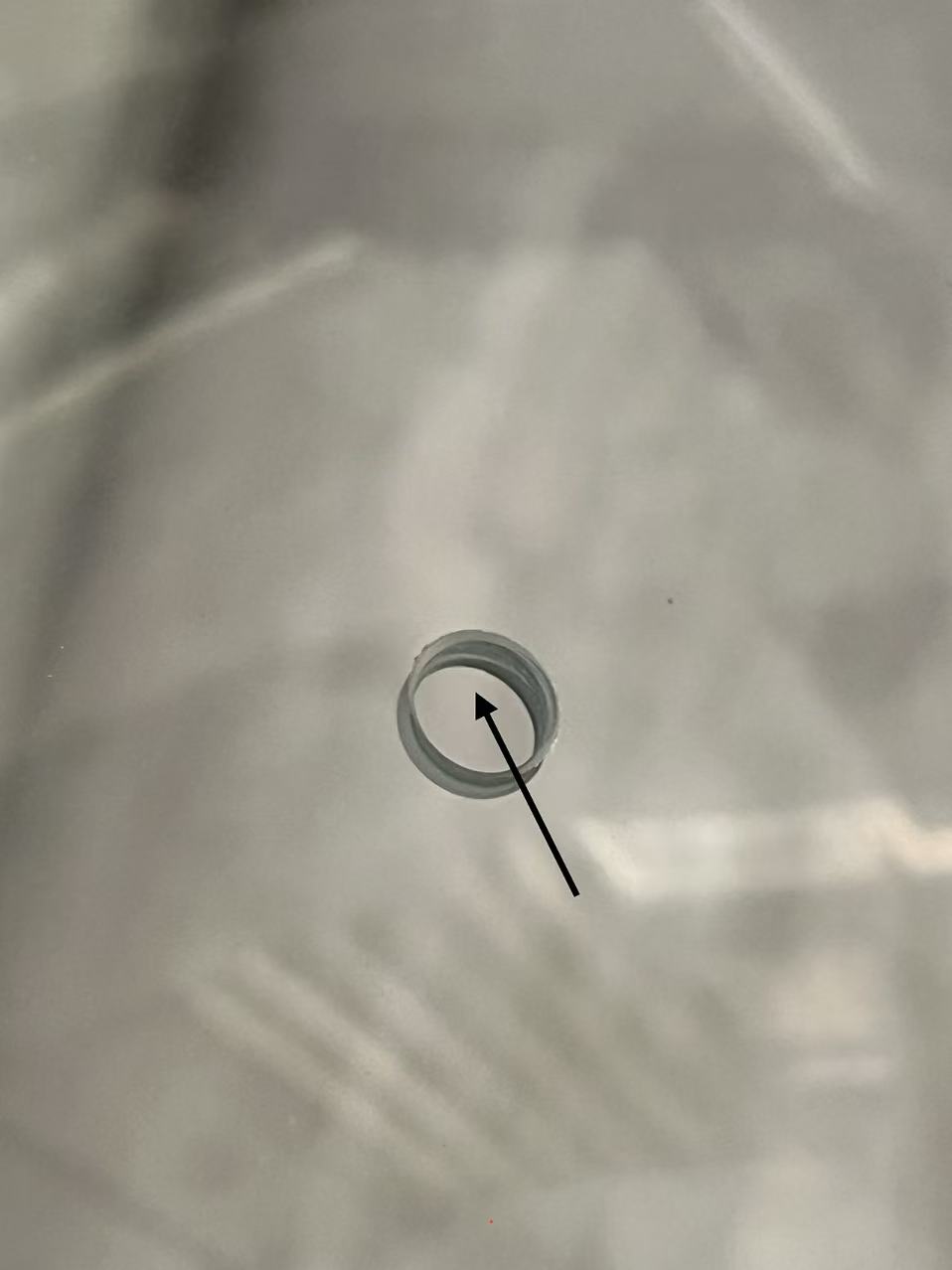
The Root Cause: Micro-cracks often originate during automated edge-grinding or uneven cooling (quenching) during the tempering process. When a lid lightly bumps against a stone countertop or cookware handle, internal stress accumulates at these unseen micro-fissures until the glass reaches its breaking point.
-
The Manufacturing Solution (Precision Edge & Rim Engineering):
-
CNC Chamfering & Edge Polishing: Eliminates microscopic burrs and stress-concentration points prior to heat tempering.
-
-
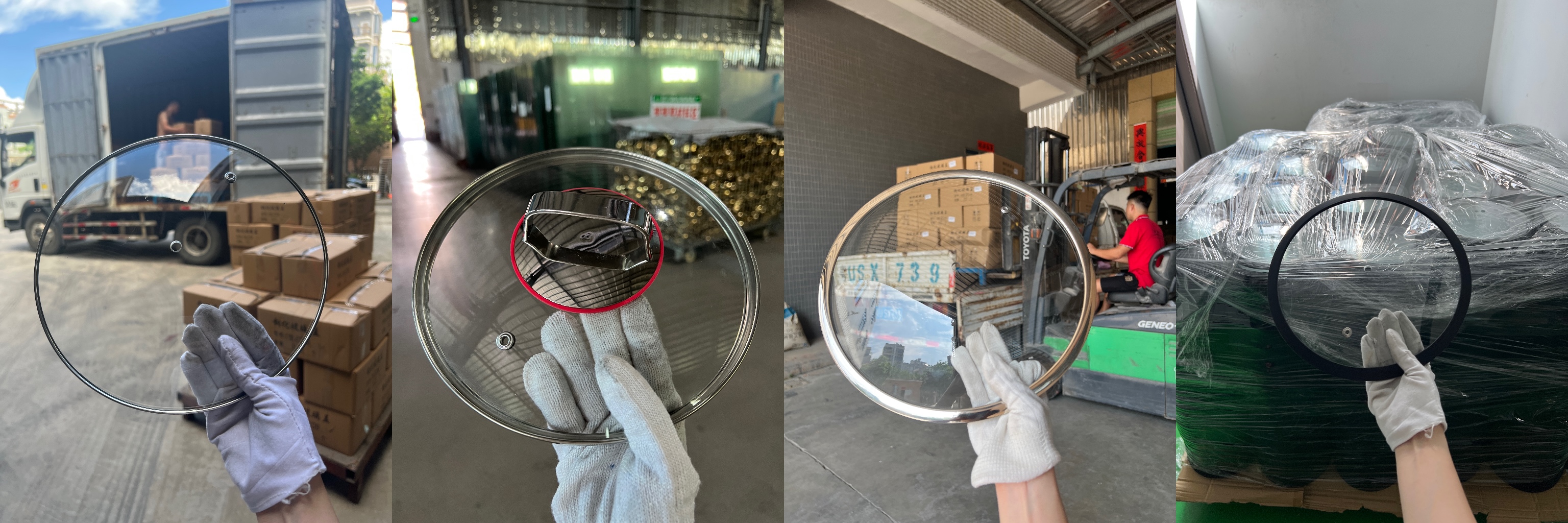
Engineered Protective Rims: Utilizing precision-stamped C-Type or G-Type or T-Type Stainless Steel Rims (Grade 304/201) or custom-molded Food-Grade Silicone Rims. These rims act as structural shock absorbers, isolating the fragile glass edge from direct physical impacts and localized heat spikes.
3. Thermal Expansion Differentials at Assembly Points
Glass, stainless steel, and aluminum expand at vastly different rates (α-coefficients) when heated.
-
The Root Cause: If a handle screw is torqued directly against raw glass without proper elastomeric cushioning, heating the lid forces the metal screw to expand directly against the glass hole walls, inducing severe localized shear stress.
-
The Manufacturing Solution (Stress-Isolated Assembly):
Professional manufacturing mandates high-temperature silicone or PTFE isolation washers between all metal hardware and glass contact points. Furthermore, assembly line workers use calibrated digital torque drivers to ensure screws are tight enough to avoid loosening, but never over-torqued to pre-stress the glass.
Summary Checklist for Sourcing Safe Cookware Glass Lids
When evaluating OEM/ODM tempered glass lid suppliers, global procurement teams should verify these essential quality standards:
-
Heat-Soak Tested (HST) Glass: Ensures 100% elimination of internal NiS impurities.
-
Precision Rim Engineering: Seamless G-Type, C-Type, or Silicone rims engineered for tight tolerances and shock absorption.
-
Stress-Isolated Hardware Assembly: High-heat silicone washers and digital torque control to protect mounting holes.
Partner with a Certified Tempered Glass Lid Manufacturer
At Shixing Tempered Glass Lid Factory, we specialize in engineering high-durability, safety-tested tempered glass lids for international cookware brands, wholesalers, and OEM partners. From raw material inspection to advanced Heat-Soak Testing (HST) and precision stainless steel rimming, we ensure every lid meets rigorous global quality standards.
Looking for reliable, export-ready tempered glass lids for your cookware line?
WeChat/WhatsApp:+86 17876805891