 中文
中文
 News
NewsA frying pan glass lid is more than a simple cover. The right lid needs to fit the pan correctly, provide suitable visibility during cooking, withstand the required temperature conditions, and match the design and quality requirements of the cookware.
For cookware manufacturers, importers, wholesalers, and private-label brands, choosing the right glass lid for frying pans is especially important because lid specifications can directly affect product appearance, compatibility, packaging, and customer experience.
This guide explains what buyers should consider when sourcing a glass lid for frying pans and what information should be confirmed before placing a bulk order.
What Is a Glass Lid for a Frying Pan?
A glass lid for a frying pan is a cookware cover designed to fit the opening of a frying pan or similar shallow cookware.
Compared with an opaque metal lid, a transparent glass lid allows users to see the food while cooking without removing the cover.
For B2B cookware buyers, a frying pan glass lid may be supplied in different configurations, including:
-
Tempered glass
-
Stainless steel rim
-
Silicone rim
-
Different handle designs
-
Steam vents
-
Different glass thicknesses
-
Different diameters
-
Customized shapes and structures
The appropriate configuration depends on the frying pan design and the requirements of the cookware brand.
Why Is Tempered Glass Commonly Used for Frying Pan Lids?
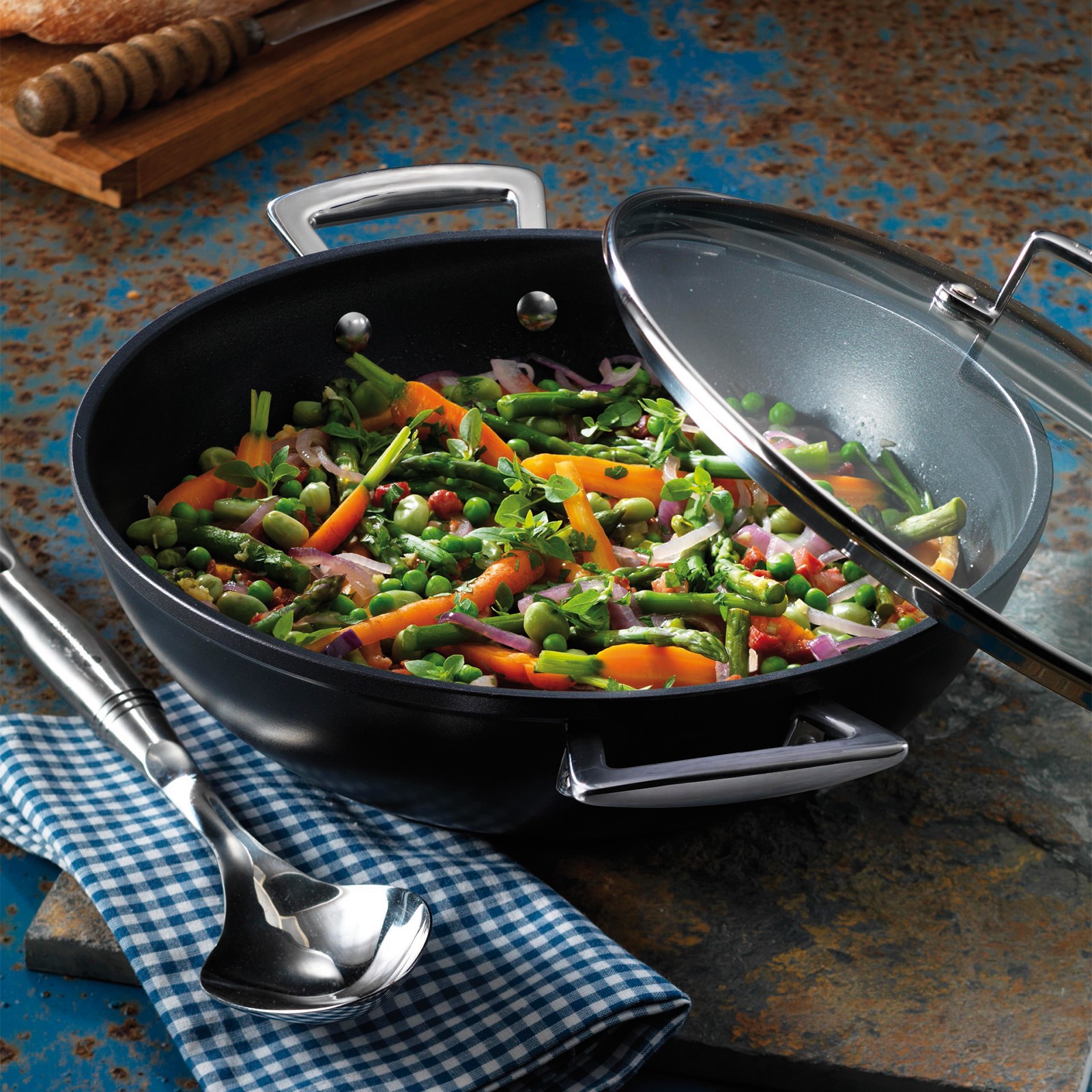
Tempered glass is widely used in cookware lids because it can provide a combination of transparency, strength, and suitability for cookware applications.
However, buyers should not evaluate a glass lid simply by asking whether it is “tempered.”
The actual product specification can include several factors:
-
Glass thickness
-
Glass diameter
-
Glass shape
-
Edge processing
-
Tempering process
-
Dimensional tolerance
-
Rim construction
-
Handle installation
-
Steam vent design
For large-volume orders, consistency is particularly important.
A cookware brand may need thousands or even hundreds of thousands of lids with the same dimensions. Therefore, the manufacturer's ability to maintain consistent production quality is an important consideration.
How to Choose the Correct Glass Lid Size for a Frying Pan
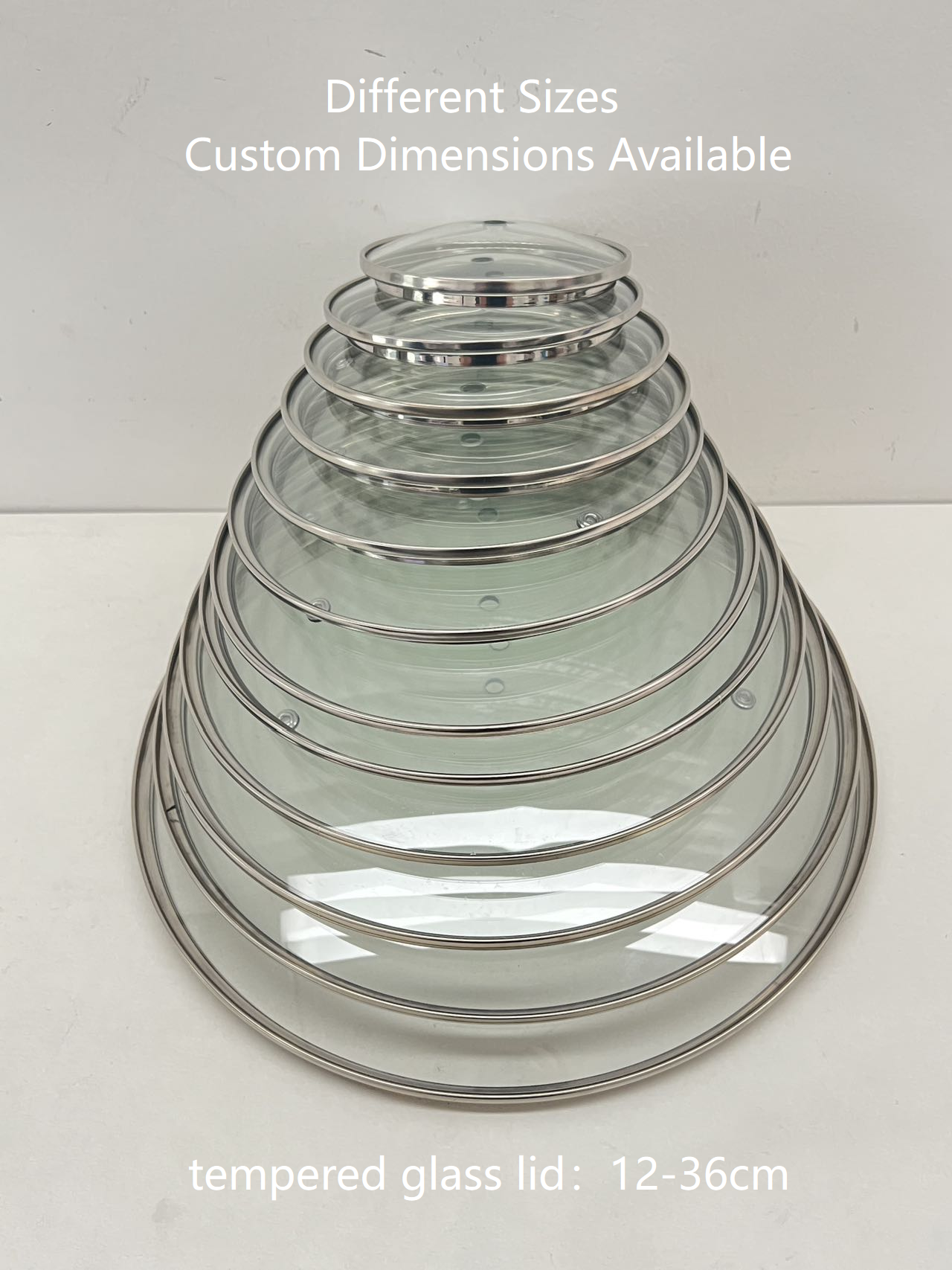
Size is one of the first specifications that should be confirmed.
Common frying pan sizes can vary by cookware design and market, so buyers should not assume that a nominal pan size automatically determines the exact glass lid dimensions.
Before ordering, measure the actual pan opening and confirm the manufacturer's measurement method.
For OEM projects, it is even better to provide:
-
A technical drawing
-
Exact pan dimensions
-
A physical sample
-
The required lid diameter
-
The required rim dimensions
-
The required tolerance
The manufacturer can then evaluate whether the existing lid design is suitable or whether a customized design is required.
Should You Choose a Glass Lid With a Stainless Steel Rim?
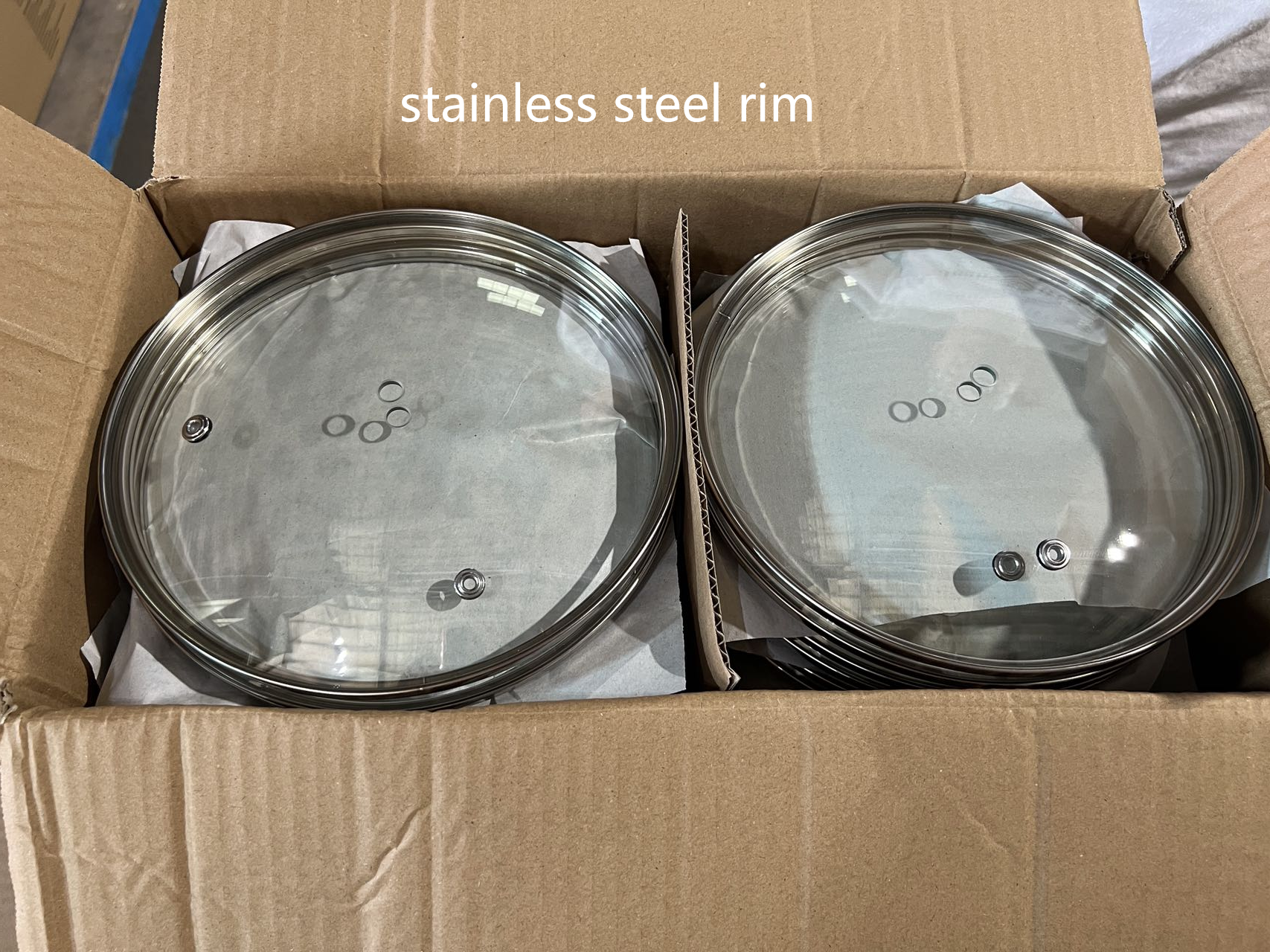
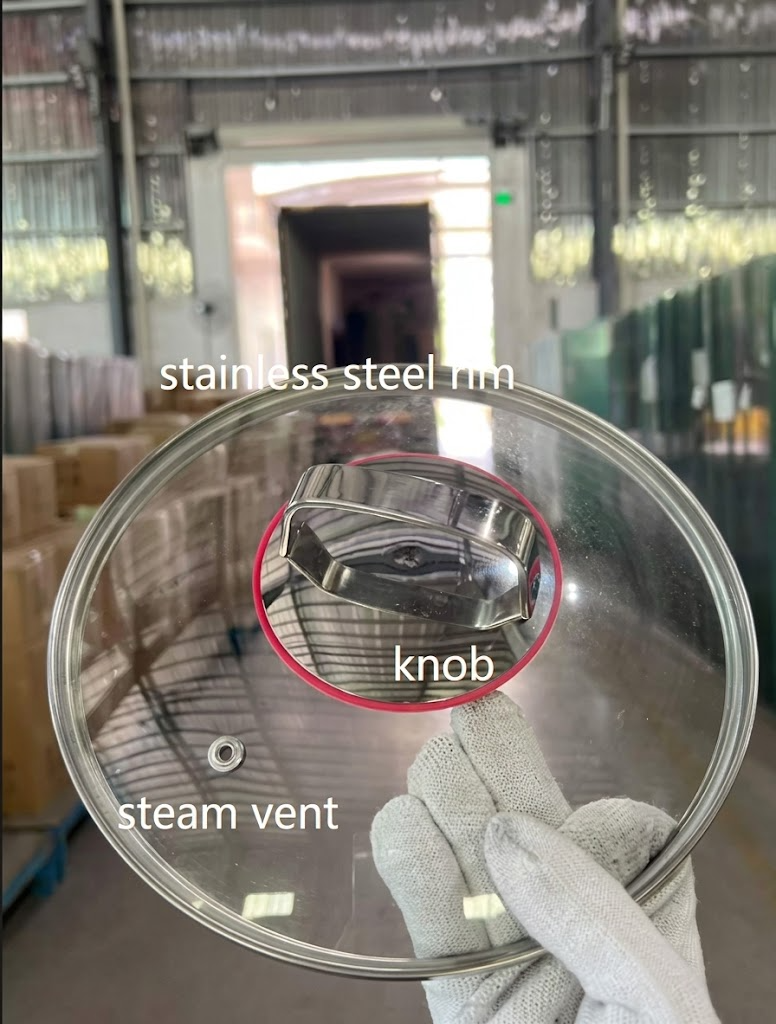
A stainless steel rim is one common configuration for cookware glass lids.
It can provide a structured appearance around the glass and can be designed to match stainless steel cookware or other cookware components.
When choosing a stainless steel rim glass lid, buyers should confirm:
-
Stainless steel grade
-
Rim thickness
-
Rim shape
-
Surface finish
-
Connection between the glass and rim
-
Dimensional tolerance
-
Corrosion-resistance requirements
The specific material should be selected according to the cookware design, target market, and customer's technical requirements.
For cookware manufacturers, consistency of the rim appearance can be particularly important when the same lid is used across a product range.
What About Silicone-Rim Glass Lids?
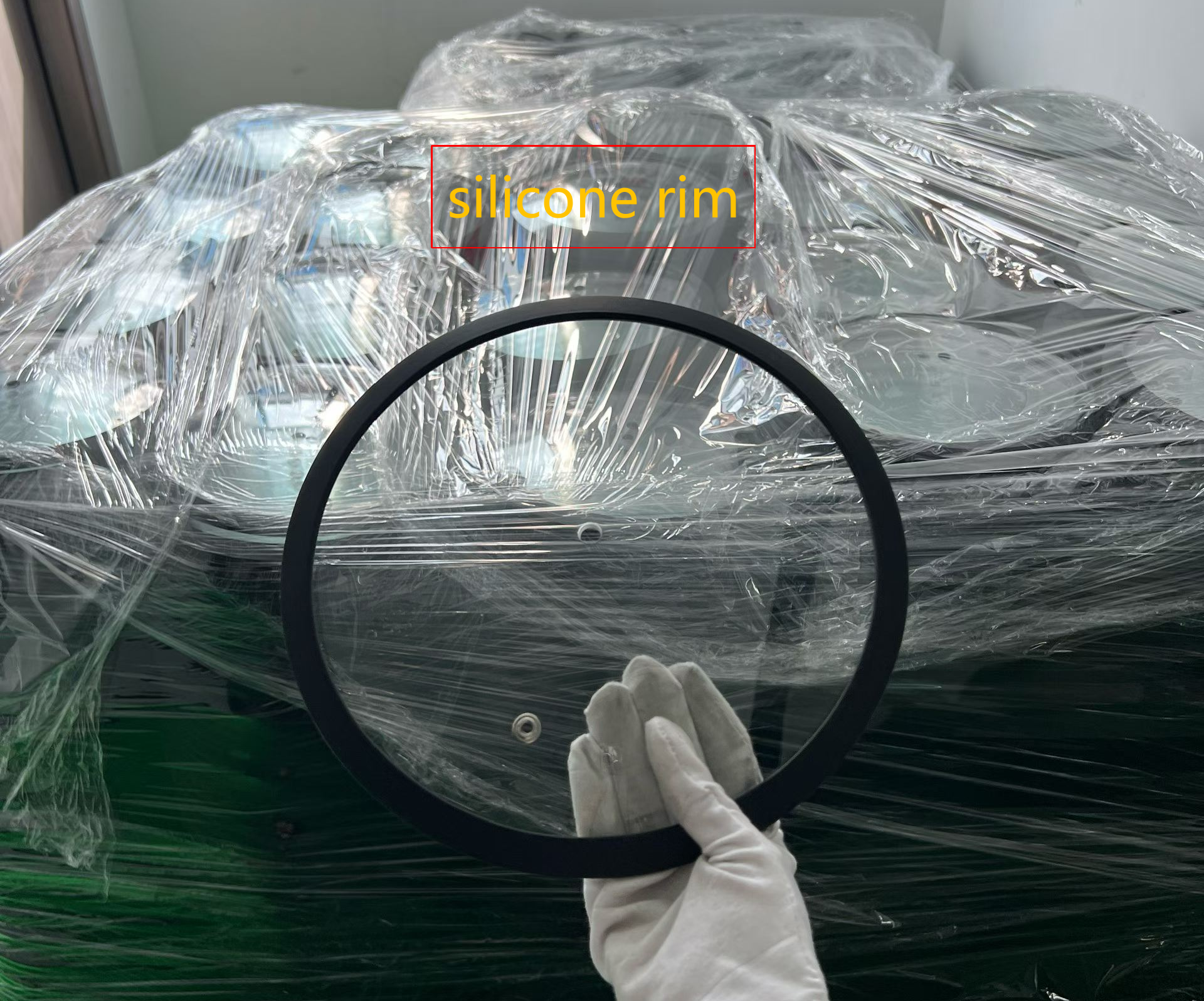
Silicone is another option for frying pan glass lids.
A silicone-rim design can provide a different appearance and may be suitable for cookware products that require a softer edge or a particular design concept.
For buyers considering silicone glass lids, it is important to confirm:
-
Silicone material specification
-
Silicone color
-
Rim dimensions
-
Glass-to-silicone fit
-
Handle design
-
Applicable testing requirements
-
Packaging requirements
The silicone design should be evaluated together with the cookware body rather than treated as an independent component.
Do Frying Pan Glass Lids Need a Steam Vent?
Many cookware glass lids incorporate a steam vent.
The purpose and design of the vent can vary according to the cookware product.
A buyer should confirm:
-
Whether a steam vent is required
-
Vent position
-
Vent size
-
Vent component
-
Appearance
-
Assembly method
For customized frying pan lids, the vent should be considered during the product-development stage rather than added after the design has been finalized.
How to Choose the Handle for a Frying Pan Glass Lid
The handle is another important part of the lid.
Depending on the cookware design, buyers may require different handle shapes, materials, colors, or installation methods.
When developing a custom frying pan glass lid, consider:
-
Handle material
-
Handle shape
-
Handle height
-
Grip requirements
-
Color
-
Logo
-
Fixing method
-
Compatibility with cookware packaging
The handle should also be considered together with stacking and packaging requirements.
A handle that looks attractive on a sample may create unnecessary packaging problems if the final product is being shipped in large quantities.
What Should B2B Buyers Consider When Ordering Glass Lids for Frying Pans?
For commercial orders, product appearance is only one part of the decision.
Buyers should also evaluate:
1. Product consistency
Can the manufacturer maintain the same dimensions and appearance throughout mass production?
2. Production capacity
Can the factory handle your expected order quantity and future repeat orders?
3. Quality control
Does the manufacturer have inspection procedures for glass, rims, handles, assembly, and finished products?
4. Customization
Can the supplier manufacture according to your drawings or samples?
5. Packaging
Can the glass lids be packaged appropriately for international transportation?
6. MOQ
Is the minimum order quantity suitable for your business?
7. Lead time
Can the supplier provide a realistic production schedule?
8. Documentation
Can the manufacturer provide the relevant product documentation and testing information required for your market?
These factors are often more important for long-term B2B cooperation than a small difference in the initial unit price.
Custom Glass Lid for Frying Pan: What Information Should You Provide?
If you need a customized frying pan glass lid, providing complete specifications can make the quotation and development process much more efficient.
A typical RFQ should include:
-
Frying pan diameter
-
Lid diameter
-
Glass thickness
-
Glass shape
-
Rim material
-
Rim design
-
Handle design
-
Handle material
-
Steam vent requirements
-
Logo requirements
-
Color requirements
-
Packaging requirements
-
Estimated quantity
-
Target market
-
Required certifications or testing documents
If you already have a sample, sending the physical sample or a detailed technical drawing can also help the manufacturer understand the project.
Glass Lid for Frying Pan: Standard or Customized?
There are two common approaches.
Standard Glass Lid
A standard design can be suitable when the cookware dimensions match an existing product.
Advantages may include:
-
Faster product selection
-
Simpler ordering process
-
Lower development requirements
-
Easier repeat purchasing
Customized Glass Lid
A customized lid is more suitable when the cookware brand has specific requirements.
Customization may include:
-
Diameter
-
Shape
-
Rim
-
Handle
-
Steam vent
-
Logo
-
Color
-
Packaging
For private-label cookware brands and cookware manufacturers, customized glass lids can also help create a more consistent product appearance across a cookware series.
Why Work Directly With a Glass Lid Manufacturer?
For a small one-time purchase, supplier selection may focus primarily on price and availability.
For long-term cookware supply, direct cooperation with a manufacturer can provide additional advantages.
You can communicate directly about:
-
Product development
-
Technical drawings
-
Samples
-
Material selection
-
Quality standards
-
Production schedules
-
Packaging
-
Inspection
-
Repeat orders
This can make it easier to develop a product that matches your cookware rather than simply selecting a generic replacement lid.
Shixing Tempered Glass Lids for Cookware
Shixing specializes in tempered glass lids and cookware glass lid manufacturing, providing different product structures and customization options for cookware customers.
The product range includes different designs such as C-type, G-type, T-type, R-type and other configurations, as well as options involving stainless steel and silicone components.
For customers developing frying pans, pots, casseroles, and other cookware products, the appropriate glass lid can be selected according to the cookware dimensions and design requirements.
Shixing also provides OEM and ODM services for customers who need customized product specifications, appearance, packaging, or other requirements.
For a frying pan glass lid project, buyers can provide the cookware dimensions, technical drawing, sample, required quantity, and target market so the manufacturer can evaluate the appropriate solution.
Frequently Asked Questions
What size glass lid do I need for my frying pan?
The correct lid size depends on the actual opening and design of the frying pan. Measure the pan according to the manufacturer's recommended measurement method rather than relying only on the nominal pan size.
Can I get a tempered glass lid made for my frying pan?
Yes. Customized glass lids can be developed according to dimensions, drawings, samples, rim requirements, handle designs, and other specifications.
Can a frying pan glass lid have a stainless steel rim?
Yes. Stainless steel rim designs are commonly used for cookware glass lids. The appropriate material and construction should be confirmed according to the cookware design and target market.
Can a frying pan glass lid have a silicone rim?
Yes. Silicone-rim glass lids are another possible configuration. The silicone specification, dimensions, color, and assembly requirements should be confirmed during product development.
Can I add my company logo to a glass lid?
Depending on the product design and manufacturing process, customized logo solutions may be available. Buyers should discuss the preferred logo method with the manufacturer before production.
What information is needed for a glass lid quotation?
The most useful information includes the lid diameter, glass specification, rim material, handle design, quantity, packaging requirements, customization requirements, and target market.
Final Thoughts
Choosing the right glass lid for a frying pan requires more than matching the diameter.
For B2B cookware buyers, the complete product specification should be considered, including glass quality, dimensions, rim construction, handle design, steam vent, customization, quality control, packaging, MOQ, and production capacity.
If you are sourcing tempered glass lids for frying pans or developing a customized cookware lid, working with an experienced manufacturer can make the product-development and mass-production process more efficient.
A clear drawing, sample, or specification sheet is the best starting point for discussing a customized frying pan glass lid project.