 中文
中文
 News
NewsWhen sourcing a tempered glass lid, many buyers start with a simple request:
“I need a 28 cm glass lid.”
However, for cookware manufacturers, importers, and wholesalers, choosing the right pot lid size involves more than one number.
The cookware opening, rim structure, lid diameter, glass thickness, and protective rim all need to be considered.
Why Can't You Choose a Glass Lid by Cookware Size Alone?
Cookware is commonly described as 24 cm, 26 cm, 28 cm, 30 cm, and so on.
However, the nominal cookware size does not always represent the exact opening diameter.
Two cookware products with the same nominal size may have different rim structures or actual opening dimensions.
An incorrect lid size can cause:
- Poor fit between the lid and cookware
- Excessive movement
- Incorrect rim positioning
- Difficulty closing the lid
- Poor overall appearance
For bulk orders, simply providing “28 cm” may not be enough.
The actual cookware dimensions should be confirmed before production.
What Measurements Are Important?
When selecting a tempered glass lid, buyers should check several important dimensions.
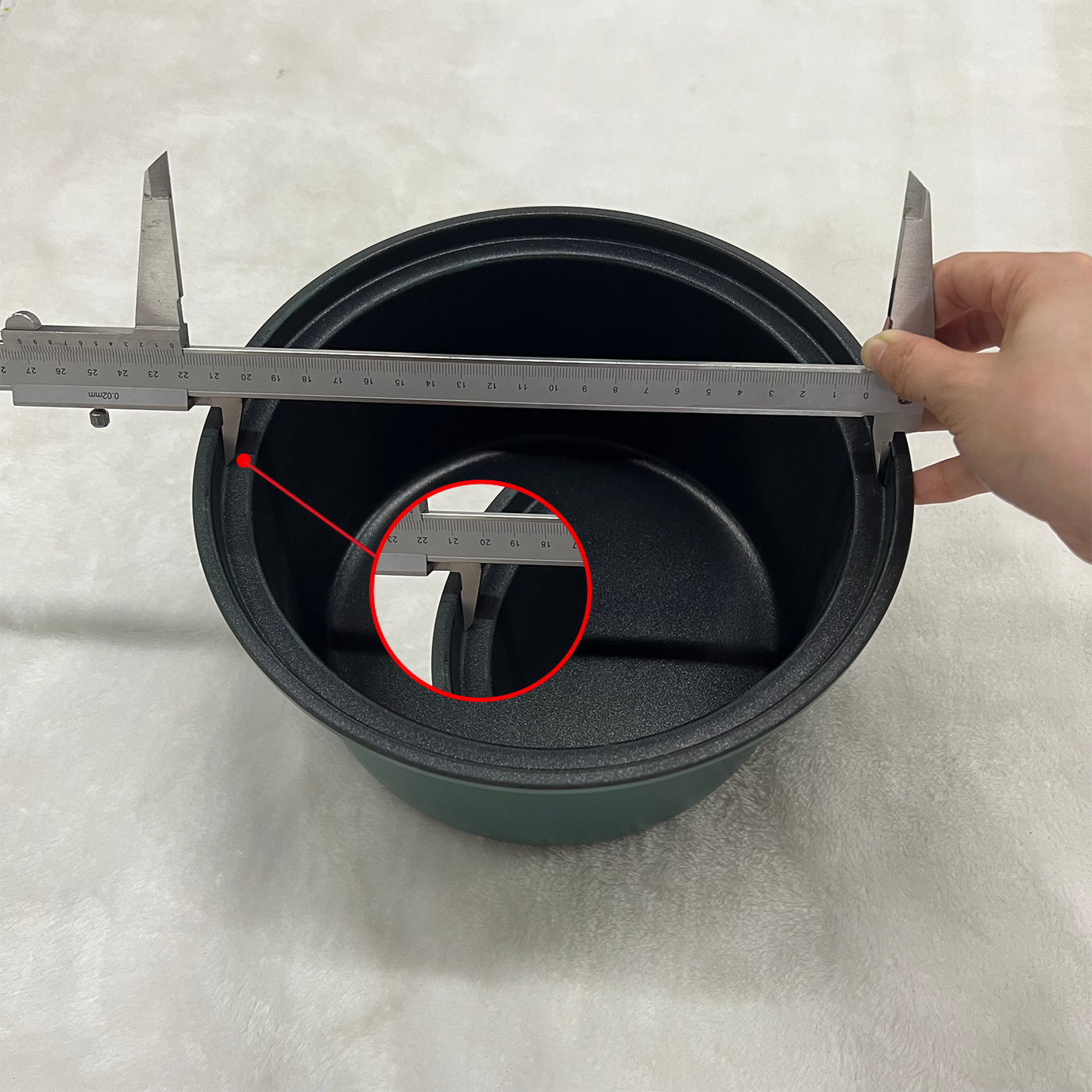
1. Cookware Opening Diameter
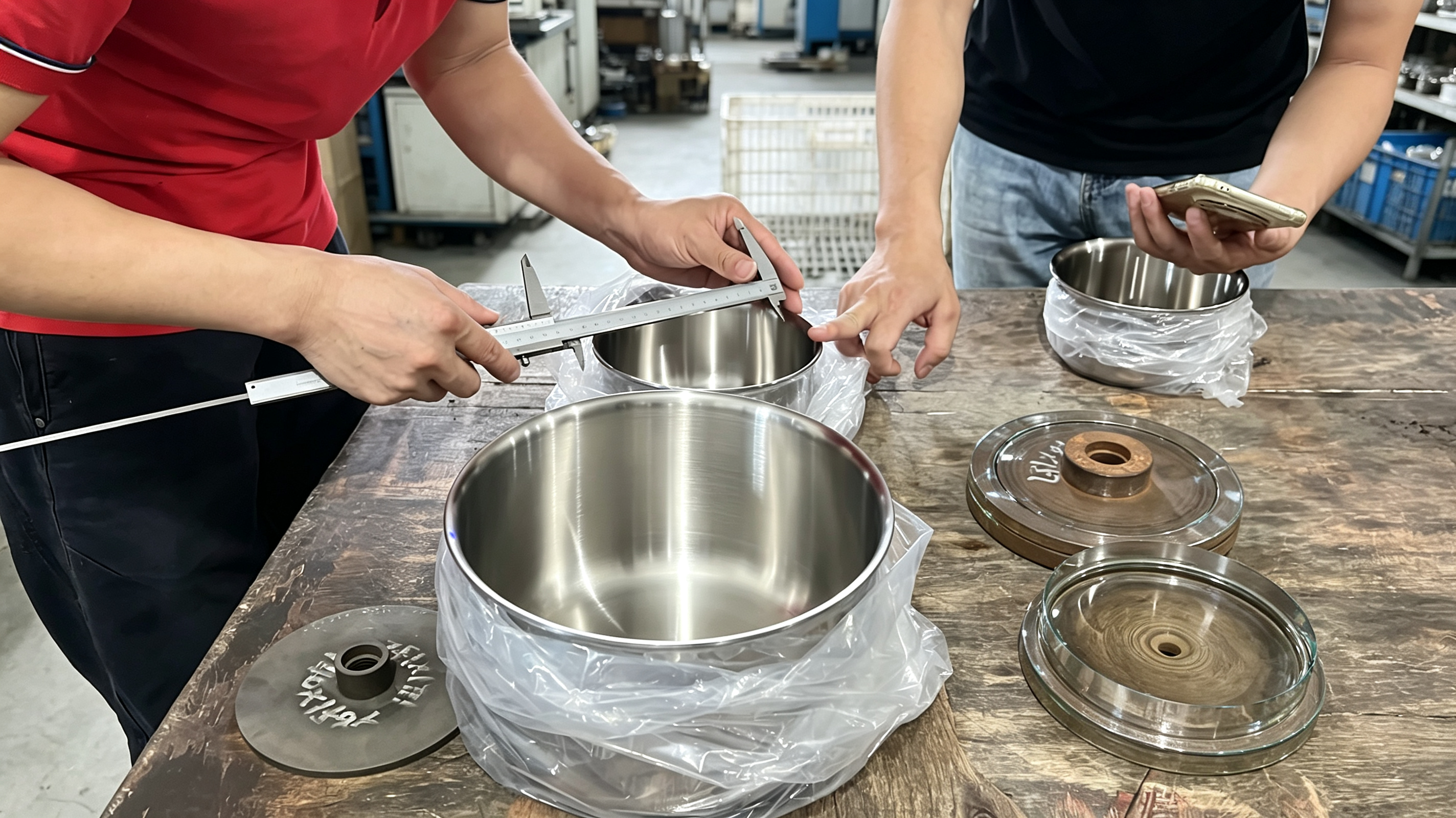
The actual opening diameter is one of the most important measurements.
It is better to measure the cookware directly instead of relying only on the nominal size shown on the packaging.
2. Cookware Rim Structure
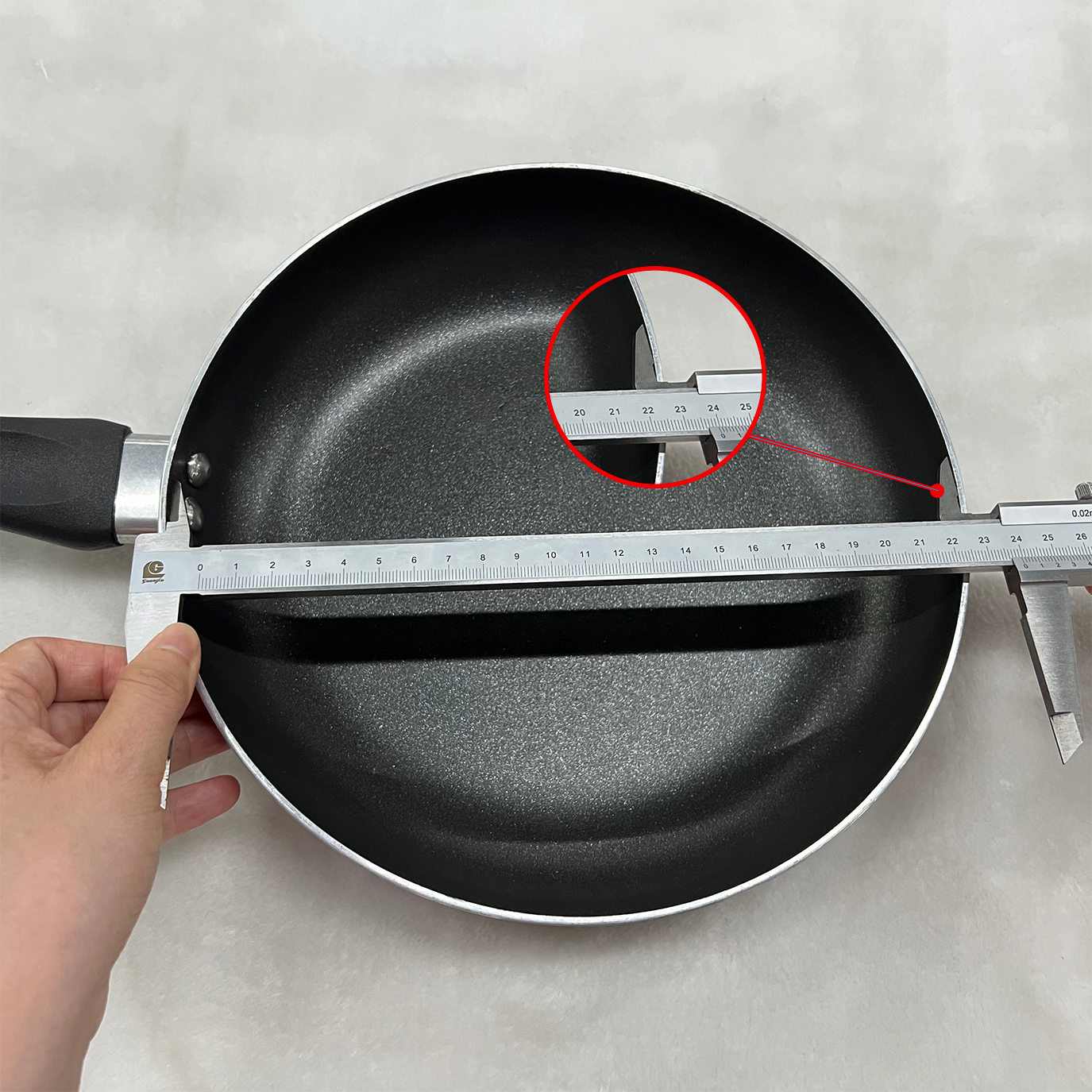
Different cookware products can have different rim designs.
Some have flat rims, while others have stepped or specially shaped edges.
The rim structure affects how the glass lid fits the cookware.
3. Finished Lid Diameter
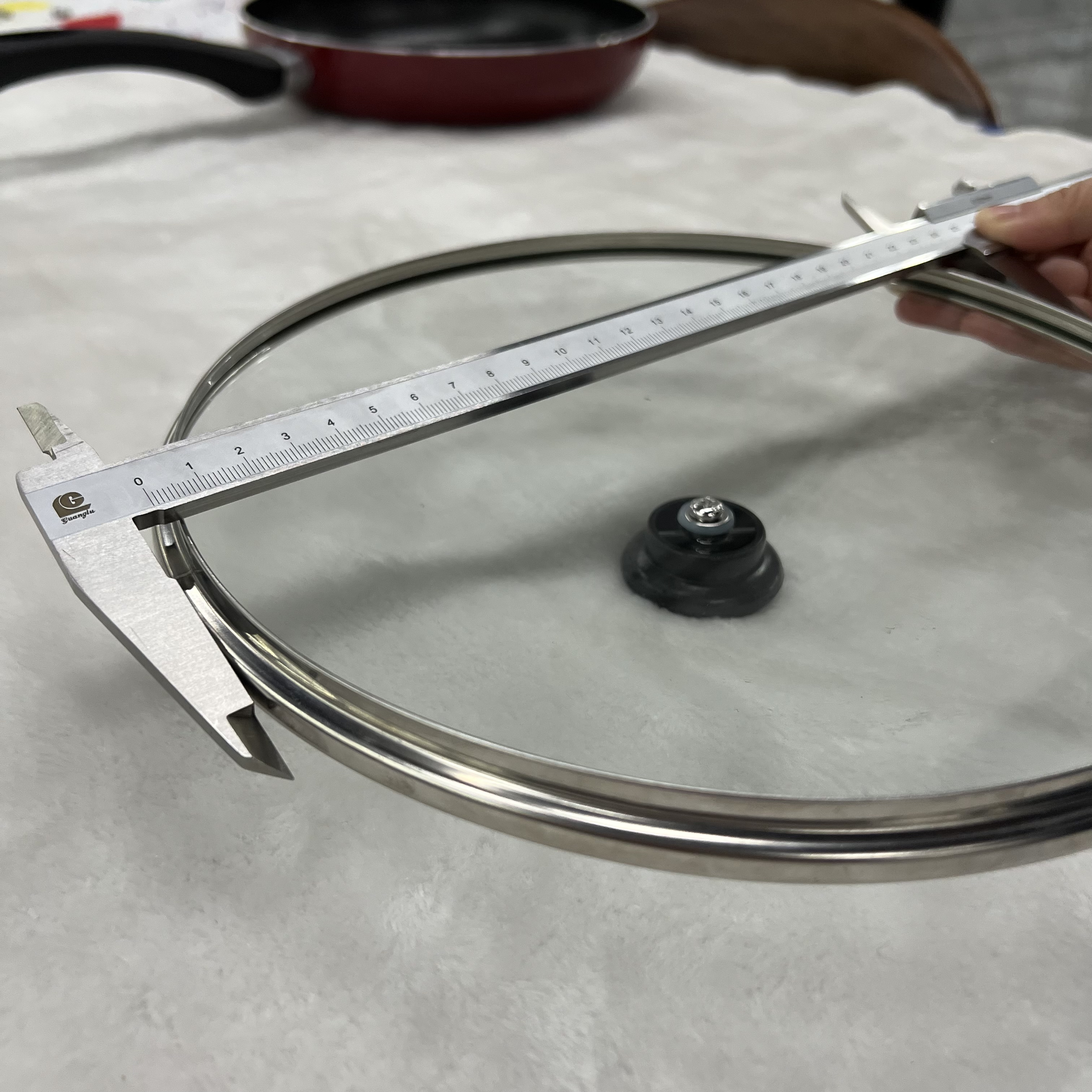
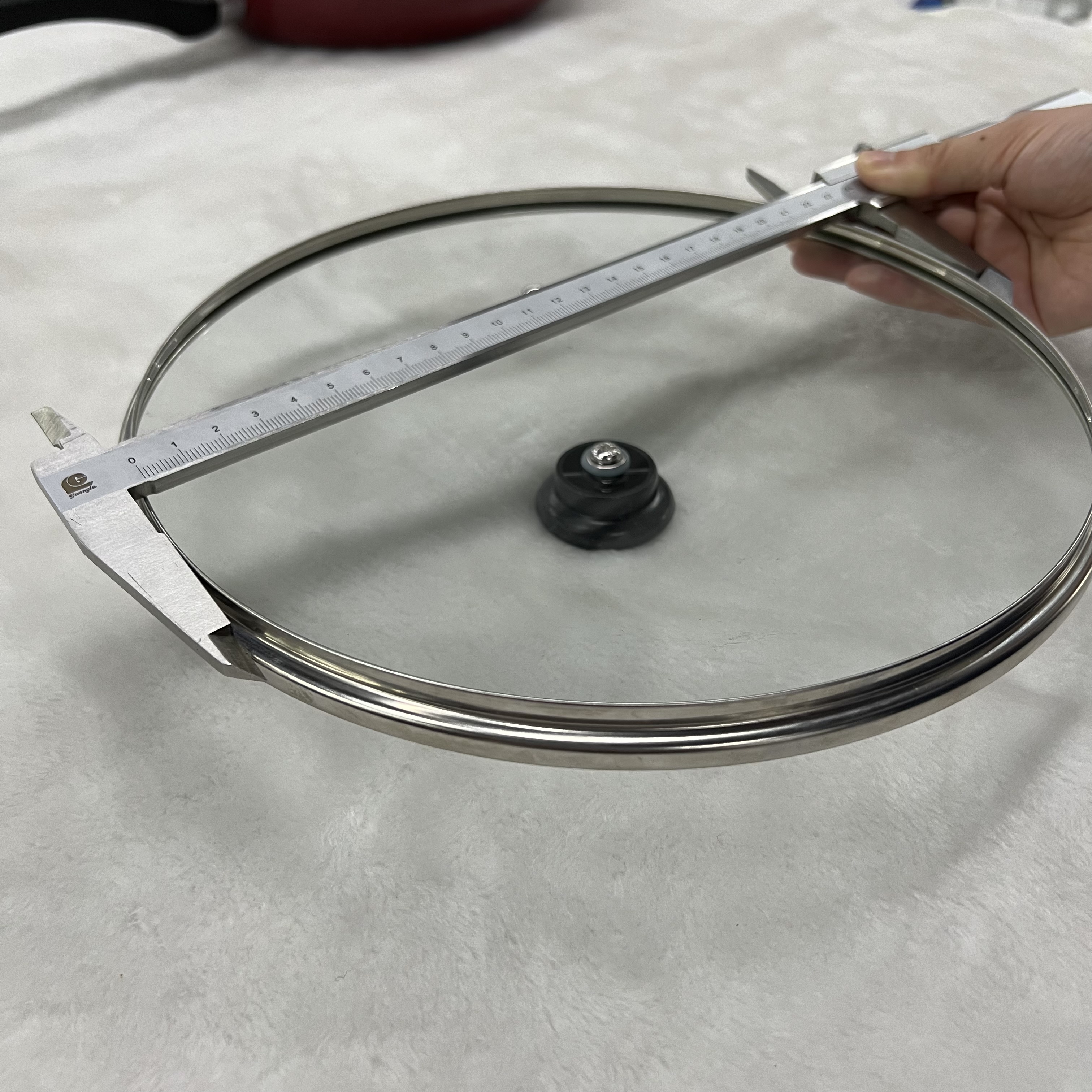
The final diameter of the lid is not necessarily the same as the glass diameter.
The protective rim must also be considered when determining the finished lid size.
4. Glass Thickness
The required glass thickness can vary according to the cookware design and product specification.
The appropriate specification should be confirmed before production.
Is Glass Diameter the Same as Finished Lid Diameter?
Not necessarily.
This is an important point for buyers sourcing glass pot lids.
Glass Diameter refers to the diameter of the glass itself.
Finished Lid Diameter refers to the overall size of the completed lid after the protective rim has been assembled.
In simple terms:
Glass Diameter + Rim Structure → Finished Lid Dimensions
Therefore, when requesting a quotation, buyers should clearly state whether the required dimension refers to the glass or the finished lid.
This can prevent misunderstandings during product development.
Different Cookware Requires Different Lid Designs
A glass lid is not necessarily universal.
Common cookware types include:
- Frying pans
- Saucepans
- Stock pots
- Casseroles
- Stepped cookware
- Stainless steel cookware
- Aluminum cookware
Different cookware may have different opening diameters and rim structures.
For example, certain stepped cookware designs require a low-profile glass lid with a rim that matches the cookware structure.
For this reason, buyers should confirm the cookware type, dimensions, and rim structure before selecting a lid.
What Information Should You Provide for a Custom Glass Lid?
If you are developing a custom tempered glass lid, providing complete information can make the quotation and sampling process much faster.
Useful information includes:
- Cookware type
- Opening diameter
- Cookware drawing
- Existing lid sample
- Required finished lid diameter
- Glass thickness
- Rim material
- Handle requirements
- Air vent requirements
- Logo requirements
- Packaging requirements
- Estimated order quantity
If you already have the cookware, providing a physical sample is often one of the most effective ways to confirm compatibility.
How Does OEM Glass Lid Development Work?
For a new cookware project, the development process may include:
Cookware sample/drawing
↓
Lid size and structure confirmation
↓
Glass, rim and handle specification
↓
Sample development
↓
Customer approval
↓
Mass production
↓
Final inspection
↓
Export packaging
Confirming the specifications before mass production can help reduce unnecessary modifications and production issues.
How to Choose a Tempered Glass Lid Manufacturer?
For small standard orders, price may be an important cons ideration.
For cookware manufacturers, importers, and brands, however, it is also important to evaluate the supplier's:
- Glass processing capability
- Tempering capability
- Dimensional control
- Rim assembly
- OEM/ODM capability
- Mass-production capacity
- Packaging capability
- Export experience
A good sample does not always guarantee consistent mass production.
For long-term cooperation, stable quality and production capability are important factors when selecting a tempered glass lid manufacturer.
Shixing Tempered Glass Lids
Shixing has been manufacturing tempered glass lids since 1999 and provides glass lid solutions for cookware manufacturers, brands, importers, and wholesalers.
Depending on the cookware design and project requirements, customized options can include:
- Lid diameter
- Glass thickness
- Protective rim
- Handle
- Air vent
- Logo
- Packaging
For OEM and ODM projects, customers can provide a cookware sample, technical drawing, required dimensions, and estimated order quantity for evaluation.
Final Thoughts
Choosing the right tempered glass lid is about more than simply saying “28 cm.”
The key information includes:
Cookware opening + rim structure + glass diameter + rim dimensions + finished lid diameter.
For customized or bulk orders, providing a cookware sample or technical drawing allows the glass lid manufacturer to confirm the specifications more accurately.
For cookware manufacturers and brands, confirming the lid dimensions and structure early can make product development more efficient and help ensure stable mass production.