 中文
中文
 News
NewsIf you look at a typical glass pot lid, you may notice a small hole on the glass.
This small hole is called a steam vent, air vent, or steam release hole.
Although it looks simple, the vent can be an important part of a cookware lid design.
So, why do some tempered glass lids have a steam vent while others do not?
What Is a Steam Vent on a Glass Lid?
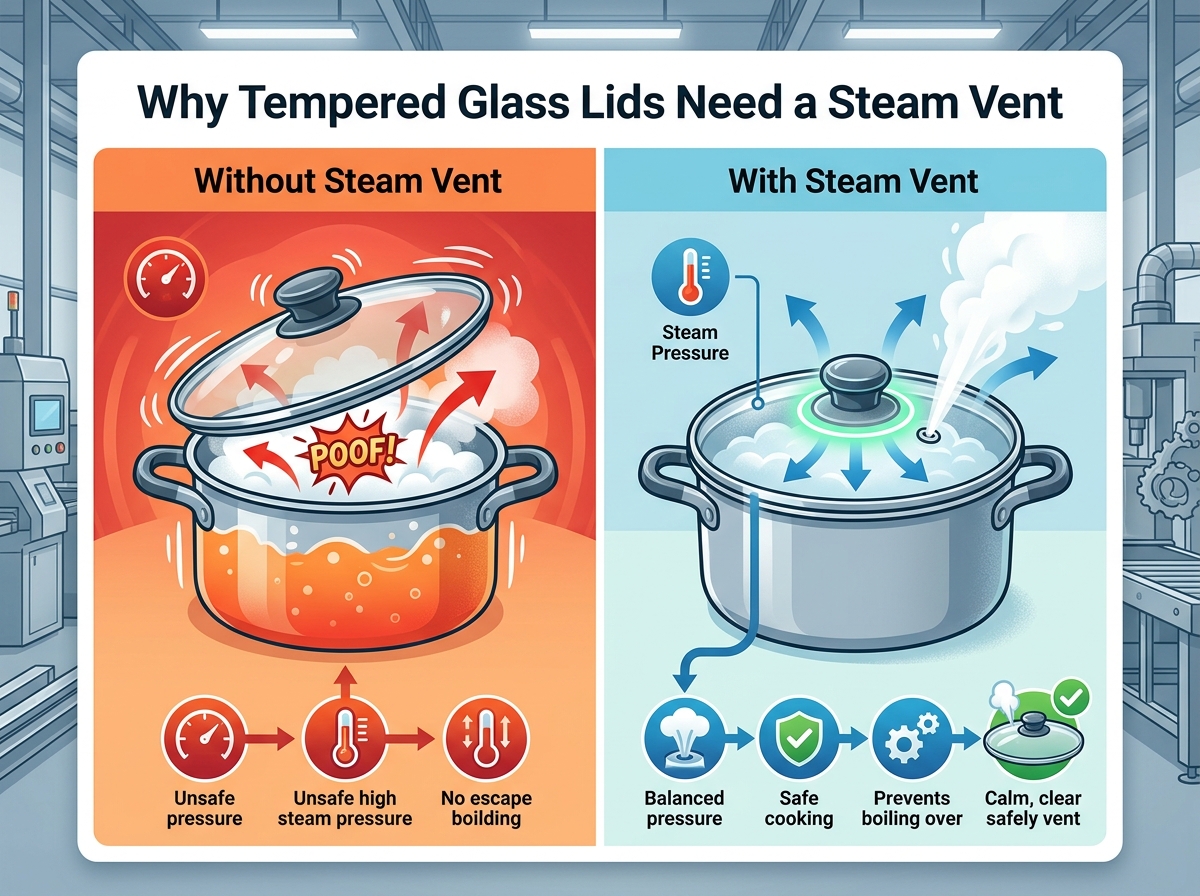
A steam vent is a small opening in a cookware lid that allows part of the steam inside the cookware to escape.
During cooking, water produces steam as the temperature rises.
A completely closed lid can allow steam to accumulate inside the cookware. Depending on the cookware design, a vent can be used to help release some of this steam.
For this reason, many tempered glass lids are designed with a steam vent.
What Does a Steam Vent Do?
1. Helps Release Steam
The primary function of a steam vent is to provide an opening for steam to escape.
This can help reduce continuous steam accumulation inside the cookware.
2. Helps Reduce Lid Movement
For some cookware designs, steam accumulation may cause the lid to move or vibrate during cooking.
A properly designed vent can help improve this situation.
The actual effect depends on the cookware, lid size, and cooking conditions.
3. Can Help Reduce Overflow in Some Cooking Conditions
Different foods and cooking methods produce different amounts of steam.
A suitable vent design can help control steam release and may reduce the possibility of overflow caused by excessive steam accumulation.
However, a steam vent does not completely prevent food from boiling over.
Do All Tempered Glass Lids Need a Steam Vent?
No.
Whether a glass lid needs a steam vent depends on the cookware design and customer requirements.
Different products may use:
- Glass lids with a steam vent
- Glass lids without a vent
- Different vent sizes
- Different vent positions
- Different vent components
For OEM projects, the vent design should be confirmed during product development.
Does the Position of the Steam Vent Matter?
Yes.
Although the vent is small, its position needs to be considered as part of the overall lid design.
When developing a glass pot lid, manufacturers may need to consider:
- Lid diameter
- Handle position
- Glass structure
- Cookware design
- Steam direction
- User requirements
If the lid uses a specific handle or knob, the relationship between the handle and steam vent should also be considered.
Can the Steam Vent Be Customized?
For customized glass lids, the vent structure should be confirmed according to the product requirements.
When requesting a quotation, buyers can specify:
- Whether a steam vent is required
- Vent position
- Vent structure
- Required vent component
If the customer already has an existing cookware product, providing a sample or technical drawing can help the manufacturer develop the lid more accurately.
What Else Should Buyers Consider Besides the Steam Vent?
The steam vent is only one part of a complete tempered glass lid.
Buyers should also consider the following.
Glass
Important specifications include:
- Glass diameter
- Glass thickness
- Glass quality
- Edge processing
- Tempering
Protective Rim
Possible considerations include:
- Stainless steel rim
- Silicone rim
- Rim dimensions
- Surface finish
Handle
The handle may involve:
- Material
- Design
- Installation method
- Position relative to the steam vent
Packaging
For export orders, buyers may also need to confirm:
- Individual packaging
- Color box
- Carton
- Protective materials
- Container loading
Therefore, a complete tempered glass lid involves many different details beyond the glass itself.
How Is the Steam Vent Confirmed During OEM Development?
For a customized glass lid project, a typical process may include:
Cookware sample or drawing
↓
Lid size confirmation
↓
Glass thickness confirmation
↓
Rim and handle confirmation
↓
Steam vent confirmation
↓
Vent position and structure
↓
Sample development
↓
Customer approval
↓
Mass production
Confirming these details before production can help reduce unnecessary modifications later.
How to Choose a Tempered Glass Lid Supplier?
For standard products, price may be an important factor.
For long-term OEM cooperation, buyers should also consider whether the supplier has:
- Tempered glass production capability
- Dimensional control
- Rim assembly capability
- Handle installation
- Steam vent processing and assembly
- OEM/ODM capability
- Mass-production capacity
- Export packaging experience
For B2B customers, consistent mass-production quality is often more important than simply having a good first sample.
Shixing Tempered Glass Lids
Shixing has been manufacturing tempered glass lids since 1999 and supplies glass lid solutions to cookware manufacturers, brands, importers, and wholesalers.
Depending on the cookware design, customization options can include:
- Lid diameter
- Glass thickness
- Protective rim
- Handle
- Steam vent
- Logo
- Packaging
For OEM and ODM projects, customers can provide a cookware sample, technical drawing, required specifications, and estimated order quantity for evaluation.
Final Thoughts
A steam vent may be only a small part of a glass lid, but it is related to steam release, lid design, handle position, and the overall cooking experience.
When sourcing tempered glass lids, buyers should consider more than glass size and price. The vent, protective rim, handle, and fit between the lid and cookware should also be confirmed.
For customized products, these details should ideally be discussed before sampling and mass production.
A well-designed cookware lid is often made up of many small but important details.